
3 Lessons Learned after a Decade of ADHD Advocacy
Note: any opinions here are my own and do not reflect the those of groups and institutions that I have been a part of, such as the ADHD Society of the Philippines and the iACTcenter
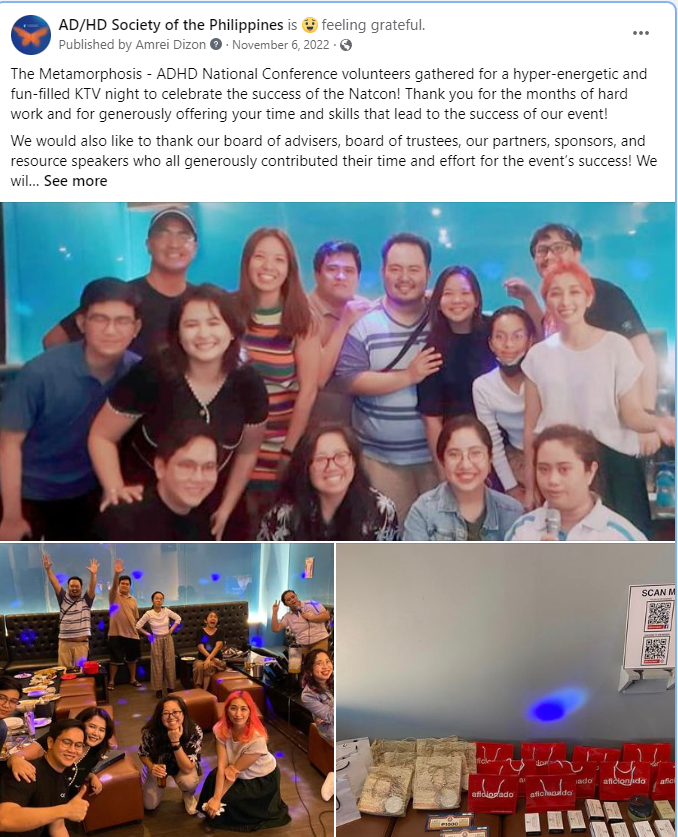
I didn’t choose to be an advocate. Rather, it came about as a necessary venture as I tried to answer the question of how to help myself as an adult with ADHD, and my younger brother who has AuDHD (autism and ADHD at the same time). While I still consider myself a casual advocate today, formally speaking, my advocacy journey spanned from giving my public testimony as a person with ADHD in 2012 at a disability conference in a women’s college and ended with helming the Philippines’ first adult conference on ADHD in 2022. I consider this separate from my position as an ADHD professional – which started in special education / mentorship in 2010 and now as a full-time ADHD life coach and team member of the International ADHD Coach Training Center (iACTcenter).
With that out of the way, here are the three lessons:
Lesson 1: Lack of advocacy has some very real consequences
Prior to the longest, perhaps most restrictive COVID-19 lockdown in the world, ADHD in the country was seen as a “first world problem”. This perception of ADHD in the Philippines shifted dramatically as rates of diagnoses soared. It even surprisingly became the most searched for Google keyword related to neurology in the country. The adult support group that we established in 2012 that had typically fewer attendees than the parent support group suddenly had many times more members. Nowadays we see Facebook pages, Discord groups, Reddit pages and so much more buzzing with the struggles of those with ADHD. From unequipped schools, discriminatory workplaces, unsupportive families, unavailable stocks of medication and expensive treatment options, it’s clear in 2026 that ADHD is a problem in every context of society. In short: imagining ADHD doesn’t exist doesn’t make it go away
Lesson 2: There will always be differences how people see ADHD – and that’s a good thing
Is ADHD a superpower or is it a disorder? Should I trust ADHD coaches or should I just stick to therapy? Should cases of ADHD be pulled out of subjects they don’t excel in – or perhaps be provided a shadow teacher – or is homeschooling the way to go? My opinion is if you meet anyone who believes they know everything there is to know about ADHD I have one advice for you: don’t walk, RUN. The top experts often have a sense of humility about their opinions and consider nuance. For instance, Ned Hallowell, author of ADHD 2.0 said “I’ve put every ounce of my being into trying to help people understand what a superpower ADHD can become if it is managed properly, and what a curse it can become if it is not.” See? Not a fixed statement, but a nuanced one. Nevertheless, every experience of ADHD is valid and so how people see it is valid. The point of advocacy is to spread awareness about ADHD and not to create a totally unified stance on it. You want to stick to everything the medical manual says about ADHD? Good for you. You want to try managing it without medication and looking to get support for that? There are others like you. If anything, the presence of diversity of opinion within the community tells us ADHD is a real thing – going beyond political, religious, and cultural stances in which all demographics will have some experience of it.
Lesson 3: It’s one thing to spread information, and another thing to inspire action
Society taking action doesn’t come handed on a silver platter. Rather, it requires a push. While awareness is still at the heart of ADHD advocacy today, the truth is getting people to support your cause takes a giant effort. The most common narrative I see many advocates take nowadays is to go with the argument “Well ADHD exists, it’s a problem and therefore we must all do X” – where X is justified by something along the lines of laws, rules, policies and the like. I prefer to take a different approach. So more than the information, I try to present the stories, the pain points, the testimonies. I try to create a vision of a society that maximizes neurodivergence in the community – where instead of prison cells or being holed up in their rooms, we harness that creative power. I try to present any discomfort in change as being worth it. Perhaps more than any of the other points, this is something I’m still learning, hence these articles on my site.
To conclude, I’ve learned that ADHD awareness is a necessary endeavor that creates a myriad of opinions about it that hopefully, will eventually move the needle for society. AND we need more of it. In my 10 years of advocacy I can’t claim to have changed society in big ways. The best I’ve done is perhaps a few small steps – e.g. made a few schools invest in supplementary ADHD coach training for their teachers or go out on a few trips with ADHD teens and young adults. Whether or not I go back into formal advocacy again, I do hope to continue to making these few small steps in my own way.
Note: This article iis NOT AI-assisted (I love writing too much to do that)
FIEL JOHN MERIA, PCC, A-CALC
