

What my Aquarium taught me about caring for an ADHD brain
Note that opinions I make in this article are my own and not opinions of organizations I’m affiliated with such as the iACTcenter, the ADHD Society of the Philippines, Kahel Press, or the BEA program. All photos in this article are property of me – Fiel John Meria and may not be claimed by anyone else.
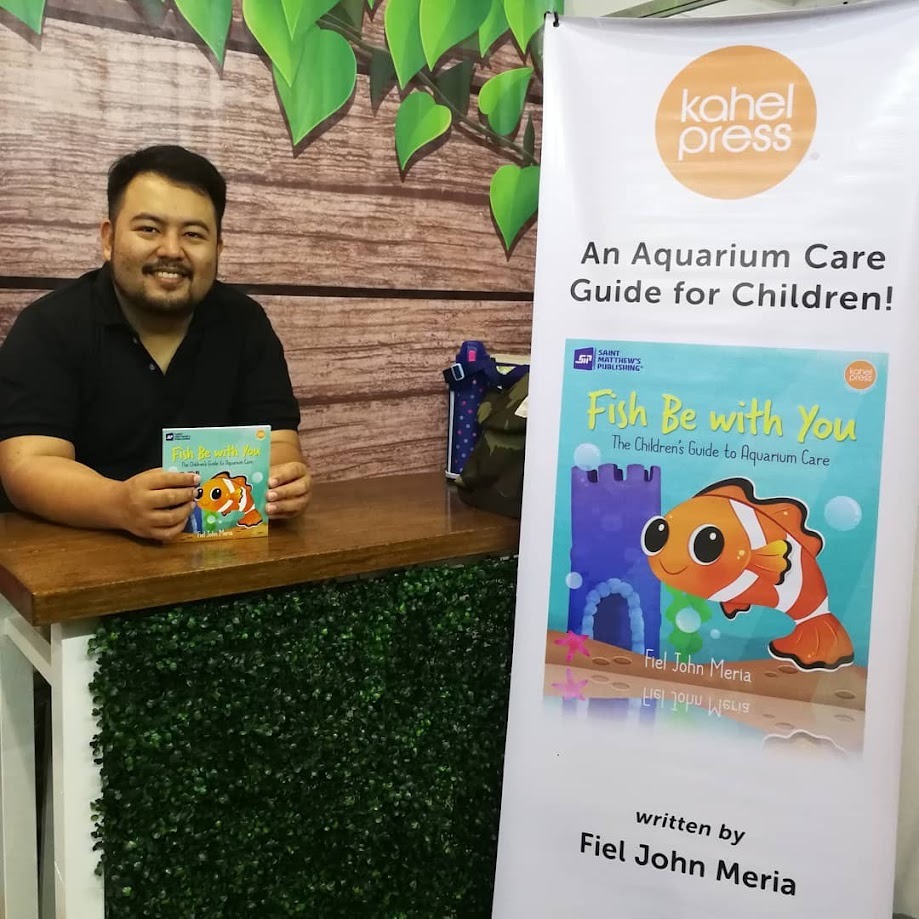
Can’t finish my Master’s degree final paper but I sure can write about fish!
I’ve roughly had the same hobbies since I was a kid but none as sticky as my love for aquariums. There’s something about the calmness it gives you and the zen vibe you get from fish happily swimming in the tank. A disclaimer to be made here: said zen vibe happens, after you’ve pulled your hair out getting your tank parameters just right, getting your fish to eat, stop algae from growing – just to name a few stressors in this hobby. I love the aquarium keeping so much I even wrote a book about it – Fish be With You – which aims to teach children this hobby with the hopes that they will avoid the heartache I went through as a kid. (Bonus points as a follower of Jesus too that I get to name a book after a pun of something he quite literally said – check out John 14:27).
With that said, there is a parallel to the different endeavors we have in our life. By hobby, I’m an aquarist (yes that’s what you call us). By profession, I’m an ADHD coach that has ADHD too. Those two facts alone should tell anyone that I will make tons of connections between things – it’s literally how I’m wired. So here’s a few between my aquarium and caring for an ADHD brain:
Connection #1: You don’t motivate a fish to survive, you build the right environment.
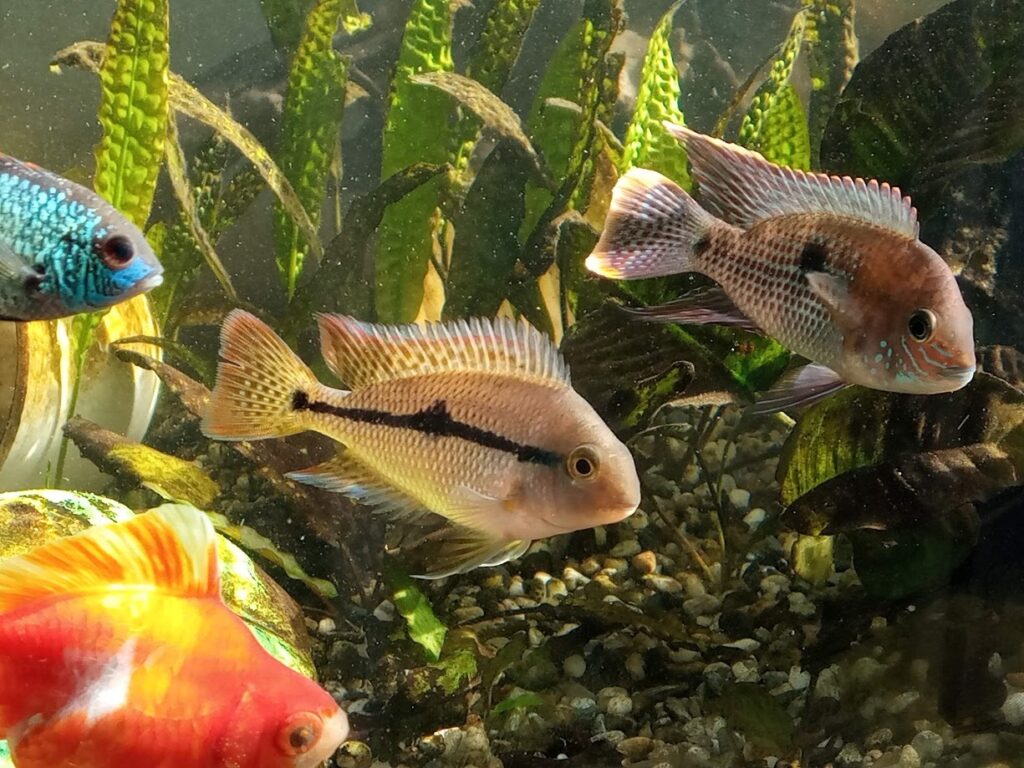
An experienced freshwater aquarist will immediately have a question about this photo
This picture from a large tank I once cared for shows a little bit of risk. See, the three fish in the foreground are South American cichlids while the fish in the lower left is a Ryukin Goldfish. Other than putting 99% of my readers to sleep with that line, the relevance of this is that the cichlids are generally considered aggressive & territorial while the goldfish is considered to be passive & peaceful. (Summary: goldfish might get bullied) But alas, a relative of mine donated to me said goldfish that they didn’t want anymore and so we experimented a bit and put it in this tank. Thankfully, it thrived and grew peacefully amid its more robust tankmates. Different fish, different situations will require different care conditions. However, as people with ADHD we often judge ourselves like goldfish amid cichlids. If you land a job and you’re the goldfish in a tank with not just cichlids but even catfish and the like and it somehow works, then hurrah! But if it doesn’t work and you can help it – why not switch tanks? I find that I’m always ready with a backup tank for my goldfish in case the cichlids become aggressive. But do I have that backup tank for me in my life? Prior to ADHD coaching, I might have forced it all too much or worse – blamed myself for being a goldfish in the wrong tank! Different fish species require different care, and so do we as neurodivergent / ADHD people.
Connection #2: Surface problems with your fish have deeper root causes
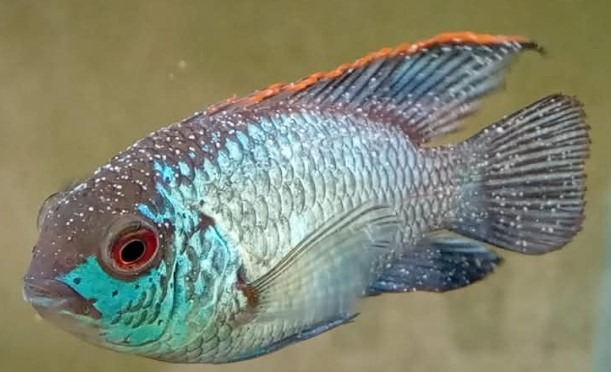
Beautiful fish – actually sick. Read on to know why
This stunning gem of a fish is called a Blue Acara. I’m happy to say I raised this one to full size prior to selling it to a happy new owner, but not before it got sick with a fish disease called “ich” as evidenced by the white spots seen in the picture from its forehead to its fins. Ich is caused by a parasite and is treated with corresponding fish medication. However, ich and fish diseases like it typically don’t show these symptoms unless there are deeper problems with your fish tank. Problems with your filter, diet, temperature, stress from bullying of other fish and so many initially invisible factors all contribute to your fish getting sick. I remember a psychiatrist friend of mine who told me the story they had of a patient who benefited from a certain ADHD medication, only to come back weeks later reporting that “the medication isn’t working anymore.” Upon further investigation, it was found that since prescribing the initial dose of the medication, this person’s life had changed from additional workload, changes in company leadership and even problems with the family. So it wasn’t that the medication wasn’t working, but that the patient’s environment had drastically shifted to become too stressful. As such, it was a situation that didn’t just call for a pharmacological approach, but digging deeper and looking at priorities and boundaries and a way to move forward.
Connection #3: A well-kept tank is different from a perfect one
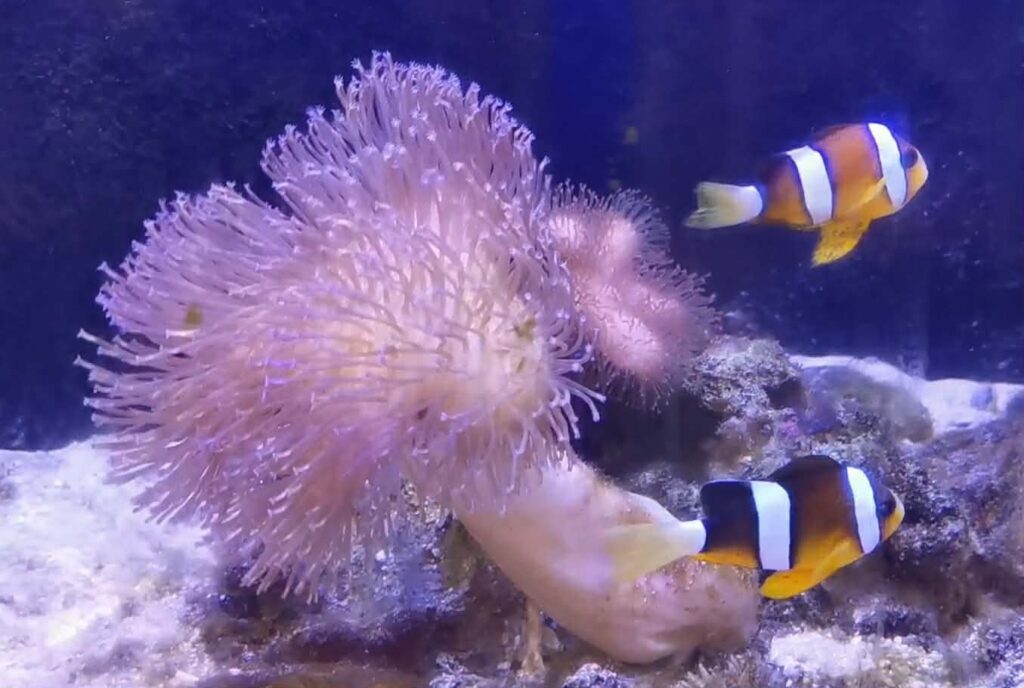
My current tank: a pair of Clownfish named Lois and Clark
It puts a smile on my face every time a client of mine comments on my aquarium tanks – this one specifically is quite visible in my background. Recently, I even had a mentee, a student of the International ADHD Coach Training Center (iACTcenter) name the exact species of clownfish in my tank as she was an aquarist like me. It was a golden moment to have a fellow ADHDer geek out with me and especially since she was enthusiastically training to be an ADHD life coach. I’ve had this tank for years now and I find it beautiful in spite of not looking like something out of a public aquarium. You can see the algae growth on the sides – not excessive, but it’s there affecting its aesthetic. But on a deeper level, algae is like a plant – as plants provide us oxygen and cleaner air, so does algae for my tank. So algae, while not looking nice, is actually helpful. Just like our imperfections, our quirks, our uniqueness are often valuable even though we may not always appreciate them, especially when we compare ourselves to neurotypical people or worse – to what we encounter on social media (in my case, aquarium YouTubers). I’ve since learned to change my perspective – learned to clean up some algae for the benefit of my viewing and learn to accept keeping some for the benefit of my tank. Going through ADHD life coaching I’ve learned the specific perspective shifts that apply specifically to my situation and I’ve been privileged to make a living doing the same for many others around the world. So the goal isn’t perfection – it’s just reasonably and uniquely well-kept.
In coaching and as our mantra with the ICF (International Coaching Federation), we believe that persons with ADHD are naturally creative, resourceful and whole. We can draw connections even between seemingly unrelated disciplines and come up with insights like this. If this was helpful for you, feel free to send an email at john@neurodevcoach.com
Note: This article is NOT AI-written (I love writing too much to do that)
FIEL JOHN MERIA, PCC, A-CALC
Originally posted at neurodevcoach.com
