ADHD and Neurodivergence: Finding the Right H.A.R.D.

This brilliant stock image from Canva is remarkably accurate in depicting what it’s like to have ADHD – a maze in our head we can’t quite turn off due to our overactive DMN!
If you read this and find the concept of H.A.R.D. useful, please feel free to use it for yourself but do not forget to cite this article, my name Fiel John Meria and/or my website neurodevcoach.com
Chapter 5 of Ned Hallowell and John Ratey’s book ADHD 2.0 is brilliantly titled “Find Your Right Difficult”. In summary, the chapter emphasizes that those with ADHD and VAST characteristics are fully capable and need the challenge of doing difficult things but we do have to find it. Still going by what the book says, some places to look for it are our strengths, trusting our gut feel and getting the right support such as getting an ADHD coach (hello!).
I wholly agree with what the book says and this article aims to build into this further with my H.A.R.D. principle for finding your right difficult. If you have ADHD, are neurodivergent and seeking clarity as to your current path, I hope this helps!
H – You need to be helpful to others. One thing I find well-intentioned people get wrong when giving advice to the neurodivergent is the idea of “just pursue your passion.” First off, your strength doesn’t always equal passion and vice versa. Secondly, while I agree that our path has to be at least a bit interesting to us, this does not mean that our passion automatically becomes our job. If this were the case, I would probably be playing videogames and not be coaching for a living. Don’t get me wrong – I absolutely love coaching but if you’re telling me it’s all about passion I wouldn’t have landed where I am now. In my years of coaching, I find that this mindset of “passion = purpose” often backfires because we put too much pressure on our passion to be everything for us whether it be art, science, academe, business, sports and the like. Sometimes with the diagnosis of neurodivergence we expect ourselves to be like famous neurodivergent people such as rich like Elon Musk, as critically-acclaimed as Vincent Van Gogh and/or as competitive as Michael Phelps. I say this: go ahead and practice your passion, but passion isn’t the starting point of purpose, service is.This is why I coach over playing videogames: because coaching serves people. Service doesn’t have to be flashy either. You can volunteer for a soup kitchen, a political movement you resonate with or even at church. You can take a part-time job for starters. Heck, it doesn’t even have to be a paying job or even a “job” altogether. My younger brother, diagnosed with both autism and ADHD as well as going through years of depression, really started to recover when he started taking care of a dog that was gifted to my parents. Today, he manages my parent’s schedules and does an amazing job at it. It even to a good extent, fixed his sleep routine. So in finding the right difficult, I’d say being helpful by serving your fellow human is the first important starting point.
Some questions to ask yourself in helping find this might be:
- What’s something you’ve done that made you feel fulfilled without any of the toxic pressure?
- What’s something you can do right now that can make a fellow human feel seen, appreciated or loved?
A – You need something adaptable. Often, those with ADHD and neurodivergence trade competency for consistency. We can be streaky and amazing during our best runs but we also need to hedge for the down time. This is typically a hard pill for many of my clients to swallow because it’s always easy to imagine ourselves being this superhuman that is consistent all the time. We can envision how we might do something amazing but then get frustrated when there are days we can’t even start it. We judge ourselves by how well we follow routines and we tend to be extremely harsh on ourselves for the days we can’t. This does not mean routine is bad – the opposite actually as structure also benefits us. However, we need a context that doesn’t “prioritize what’s on our schedule”, but one that’s adaptable enough to “schedule our priorities”. Yes, this means a context that will allow us to rest when we need it while we regather ourselves. I am fortunate that this is an ethical principle in my practice of ADHD coaching – when I don’t feel 100% for any reason, I brief my clients that I will need a reschedule because I recognize that I am a neurodivergent human and that they deserve me when I’m really able to serve them fully. So we shouldn’t feel guilty for needing adaptability in the role we’re going for. In fact, we should expect it, advocate for it and work around the need for it.
Some questions to find your adaptability might be:
- What support/s would really help me to perform reasonably well in my ideal role?
- In considering the principle of “nobody is perfect” – is there a difference between the standard I should aspire to and what I should realistically expect myself to be?
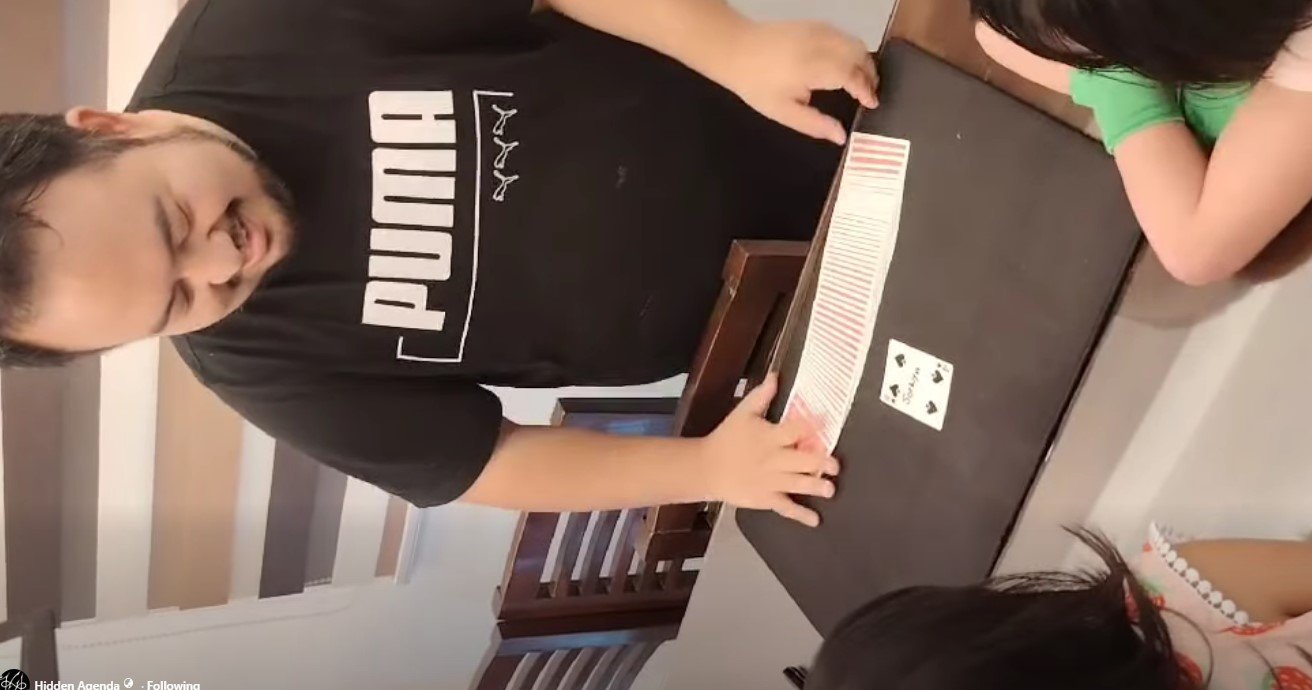
Yes I was a magician! Not professional anymore but it comes in handy like so when you have two little girls. This clip is viewable at https://www.facebook.com/reel/3466095313525626
R – You need to find regulation. More than 20 years ago, I started working as a magician at 16 years old. And while I enjoyed it, the job was hopelessly stimulating for me. It was chaotic, often without structure and I was basically in a party all the time. Worst of all, I missed all the important holidays with the family such as Christmas and New Year’s Eve. After a gig I was often too exhausted to even do school or anything else. My current roles and responsibilities in contrast, are very regulating to me such as my coaching job, being the dad of two girls aged 7 and 4, assisting my mom (who is very fun and hyper) and oh – my wife is an occupational therapist and that means she’s an expert in helping people find their regulation. One thing unique to my way of regulating is taking care of pets. As of this writing, I have two small aquariums, a sugar glider, a bearded dragon, three guinea pigs, a tortoise and a turtle. From gathering napier outside my home to cleaning out their cages to taming and cuddling with them, people might call it “hard” but the truth is I stay regulated because of this. Another term very relevant to regulation is balance. So this means nutrition, sleep, exercise, socialization – all factors that studies have shown that get compromised when you have ADHD. While I don’t think a perfect balance is possible, a good starting point is asking where we may have areas to address such as:
- How does regulation feel for me physically in my body?
- What instances in my life have brought me to this place of regulation?
- What supports do I need to help me feel regulated?
D – You need to accept being different. Stop fitting into cookie cutter roles. If you have a job that’s toxic and there is no way it changes, life’s too short not to quit. If you have a job that’s reasonable but may need adjustment, advocate for it. In 2022 I was given the privilege to speak for Crayon, the I.T. company in advocating for ADHD / neurodivergence. After the whole content, a team leader (who now possibly suspected herself having ADHD) bravely stood up and shared that she felt that there were some components of her leadership role that may need to be adjusted. Just as brave of a gesture, some of her team members, hearing this for the first time, convened with her and resolved to have a conversation about how they can support one another! It seemed they enjoyed the team leader’s ability to mentor in the technical matters of their role, while other members of the team were more than happy to support said leader in the organizational aspects of the role. The team leader got her needed support and her members felt valued in the moment. Win/win for everyone! Just because most people are doing things one way doesn’t mean you have to do the exact same thing. Questions to ask yourself in understanding your difference might be:
- If I were to accept my neurodivergent uniqueness into the role I want to play, what might that look like?
- What am I afraid to admit about the current state of my occupation?
Here’s to finding the right H.A.R.D.!
This article is not AI assisted or AI generated in any way – I love writing too much to do that
Originally posted on neurodevcoach.com
